

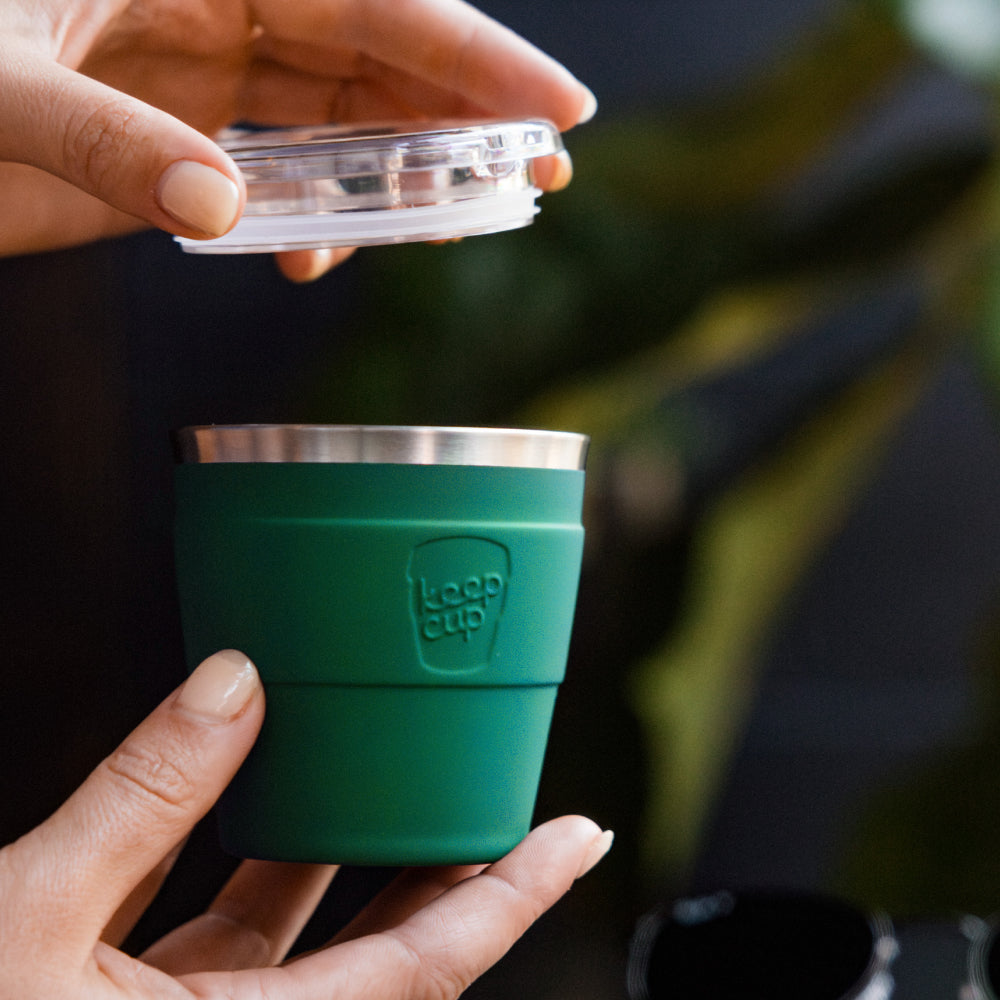
Brixton Blend is one of London's well-regarded specialty cafes, a community fixture in Brixton with a roastery presence, strong wholesale relationships, and a customer base that takes coffee and sustainability equally seriously. Their reuse program is a useful case study in what a small-to-medium specialty cafe can do when the team commits to disposable reduction.
This is what they did, what worked, and what other Australian and UK independents should take from the approach.
The Starting Point
Pre-program, Brixton Blend's outlets served a typical specialty cafe volume in disposable cups. The team had been thinking about disposable reduction for years, motivation wasn't the issue. Execution was. The challenge was running a busy independent cafe in a high-density urban environment, where customer reuse behavior varied dramatically by daypart and segment.
The Program
The Brixton Blend approach, simplified:
- Co-design partnership with KeepCup. Branded Brixton Blend Brew Cork cups, designed in collaboration with the cafe's brand team.
- BYO discount. A small per-drink discount for any reusable cup, applied automatically at the till.
- Loaner cup library. A small loaner program for regular customers, deposit-based, returned on next visit.
- Default-switching language. Service language changed from "would you like a to-go cup?" to "would you like that for here in ceramic, or in your reusable?"
- Phased disposable reduction. Disposables retained for the transition period, then gradually withdrawn at the primary outlet.
What Worked
The single highest-impact intervention was the service language change. Default-switching from "to-go cup?" to "for here in ceramic, or in your reusable?" reframed disposable from default to third option in the customer's mind. This is a free intervention with significant behavior-change effect.
The branded co-designed cup also outperformed expectation. Customers buying a Brixton Blend KeepCup felt invested in the brand. The cup became part of the customer relationship rather than a transactional purchase.
What Was Harder Than Expected
Three things the team underestimated:
Tourist Volume
Brixton draws significant tourist traffic. Tourists rarely carry reusables. The loaner program partially addressed this; the ceramic for-here option covered the rest. Expecting personal cups to dominate was unrealistic for the tourist segment.
Peak-Hour Service
The reuse program had to be operationally invisible at peak times. Any added transaction friction during the morning rush would have generated significant resistance. Barista training and till workflow changes were the key enablers.
Wholesale Spillover
Brixton Blend supplies coffee to other operators. Some wholesale customers weren't running comparable reuse programs. The brand-consistency challenge required ongoing engagement.
What This Means for Other Independents
For Australian independent cafes considering similar programs, four practical recommendations:
- Start with service language. The default-switching change is free and high-impact. Change the question staff ask customers about cup choice. Measure the result.
- Partner with a quality cup brand. Co-designed cups outperform generic. KeepCup's custom program supports cafe partnerships from small minimums.
- Budget for the staff training. The execution depends on baristas. Training is the highest-leverage operational investment.
- Phase the transition. Several months gives customers time to build the new behavior. Sudden disposable removal generates resistance.
The Wider Significance
Brixton Blend's success has demonstrated something important for urban specialty coffee: disposable cup reduction is operationally feasible and customer-acceptable when executed thoughtfully. The barrier at most independents is no longer evidence, it's commitment.
The specialty coffee category has been positioning itself as a quality-and-values leader for two decades. Disposable cup elimination is the operational expression of that positioning.
What KeepCup Brings to Cafe Programs
KeepCup's cafe partnerships typically include co-branded cup design, wholesale procurement, replacement parts ecosystems, and consultation on program structure. KeepCup products are tested to 1,000 uses, so the cups customers purchase continue serving them across years of use.
FAQs
How can an independent cafe reduce disposable cup use?
The highest-leverage interventions are default-switching service language, BYO discounts, co-branded reusable cups, and a small loaner pool. Phased transitions outperform cliff-edge switches.
Can KeepCup support smaller cafes?
Yes. KeepCup's Custom program supports cafe partnerships from small minimums. Branded cups, wholesale procurement and program design consultation.
What's the most important success factor?
Service language. The default-switching change from "to-go cup?" to "for here in ceramic, or in your reusable?" has the highest behavior-change leverage of any single intervention.
How long do branded KeepCups last?
KeepCup products are tested to 1,000 uses. Cups purchased at cafe outlets typically serve customers for years.
KeepCup Thermal, A reusable coffee cup for every climate
Why recycling won't save us from overconsumption