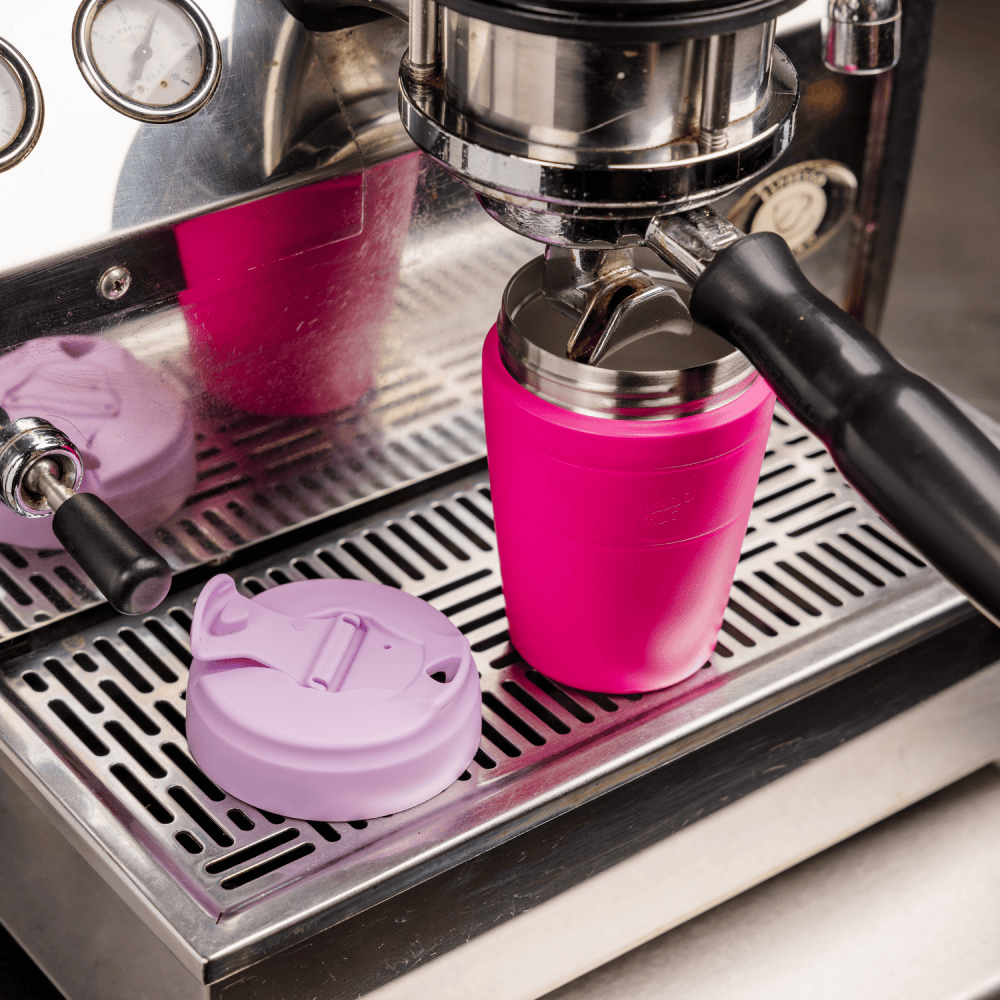
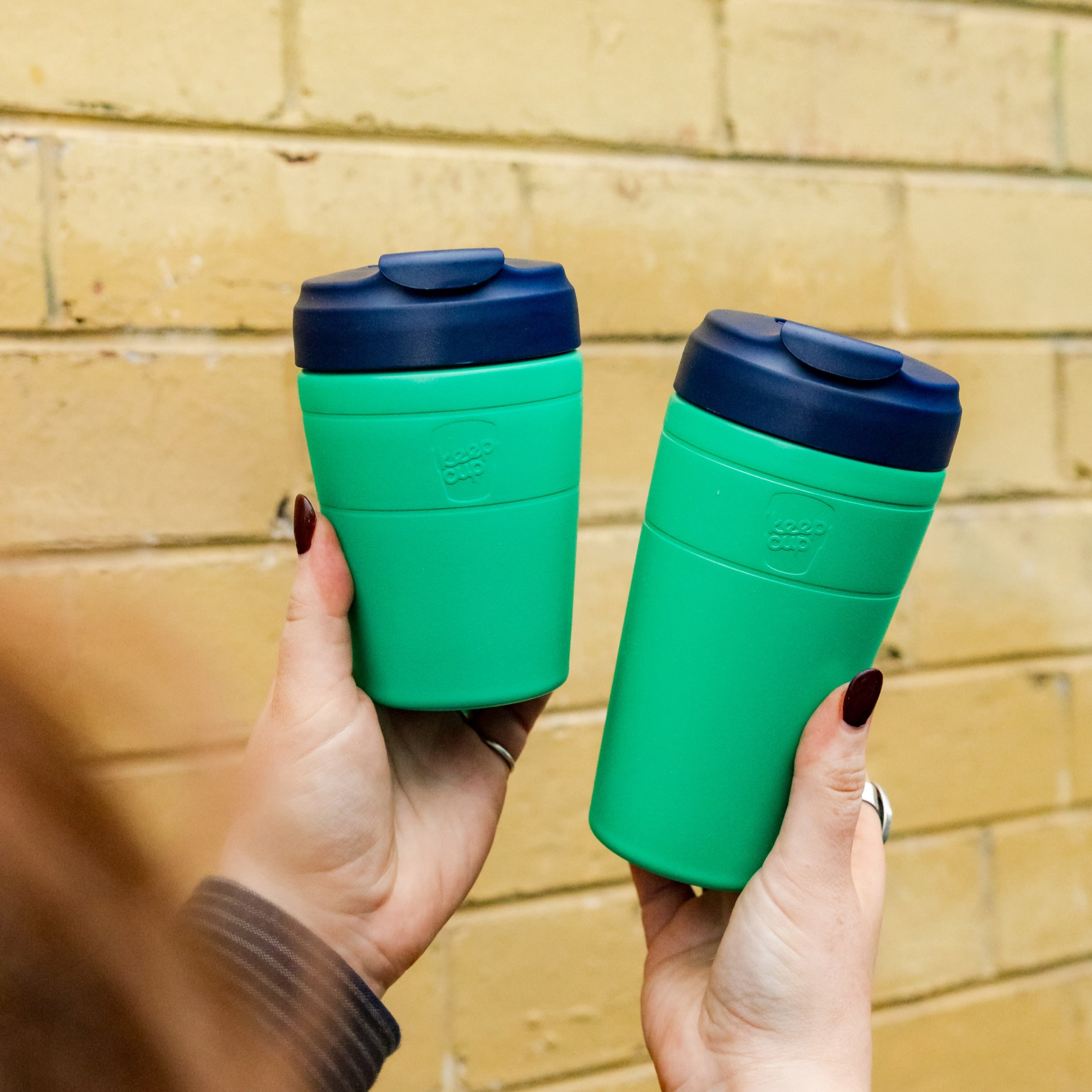
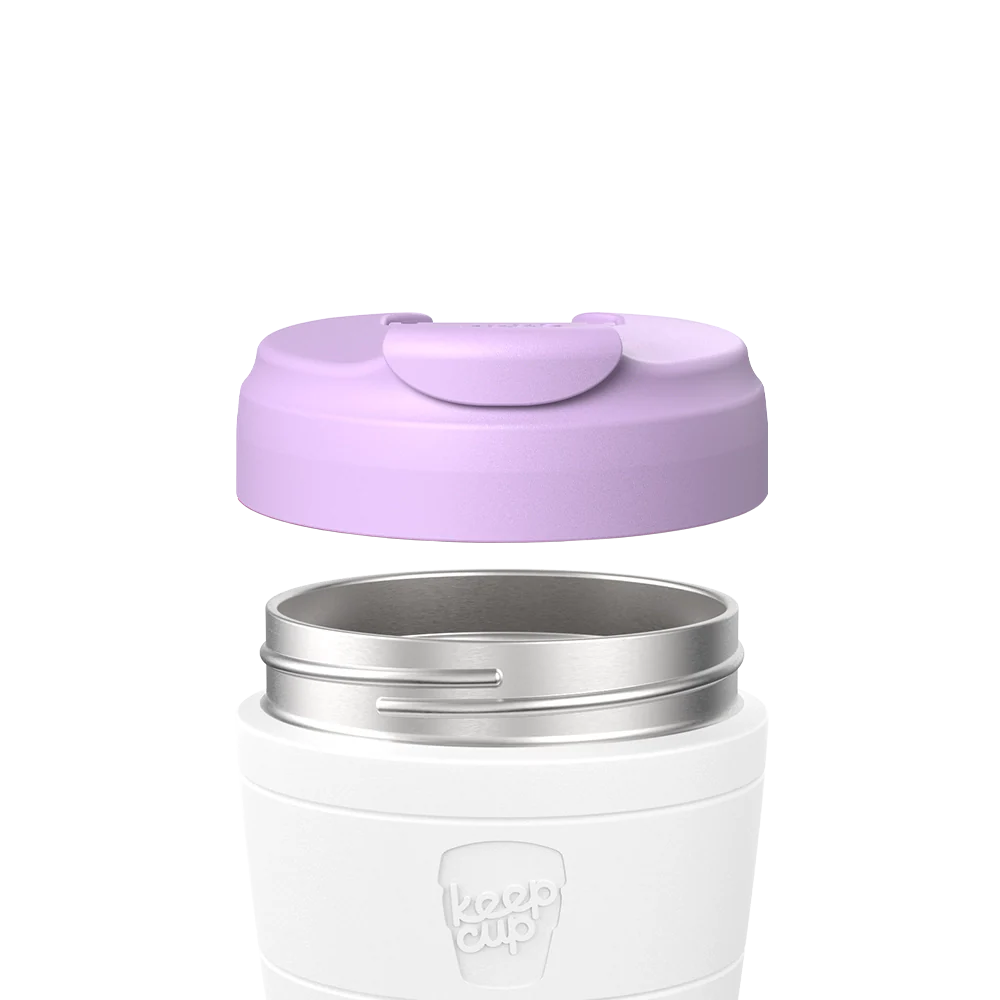
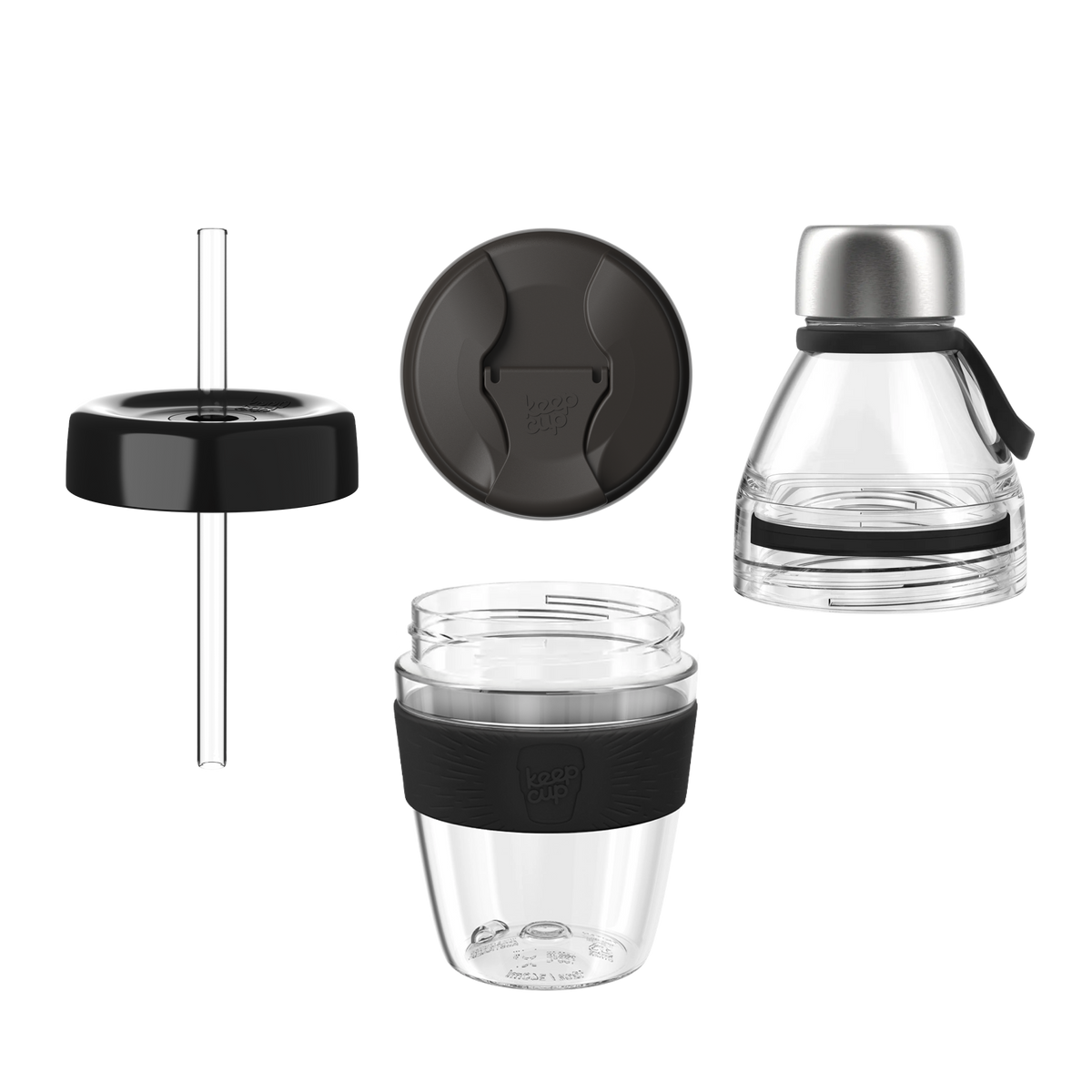
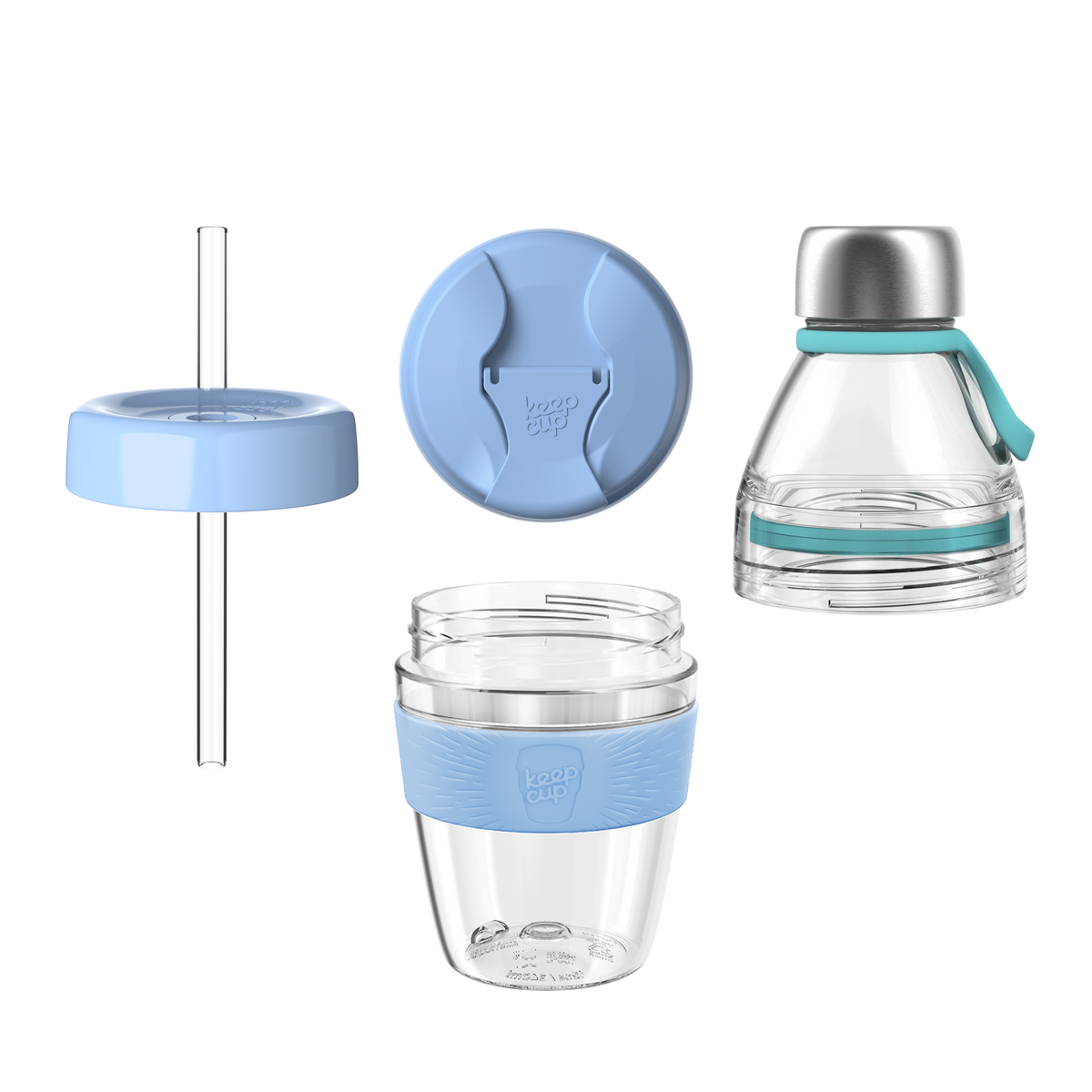
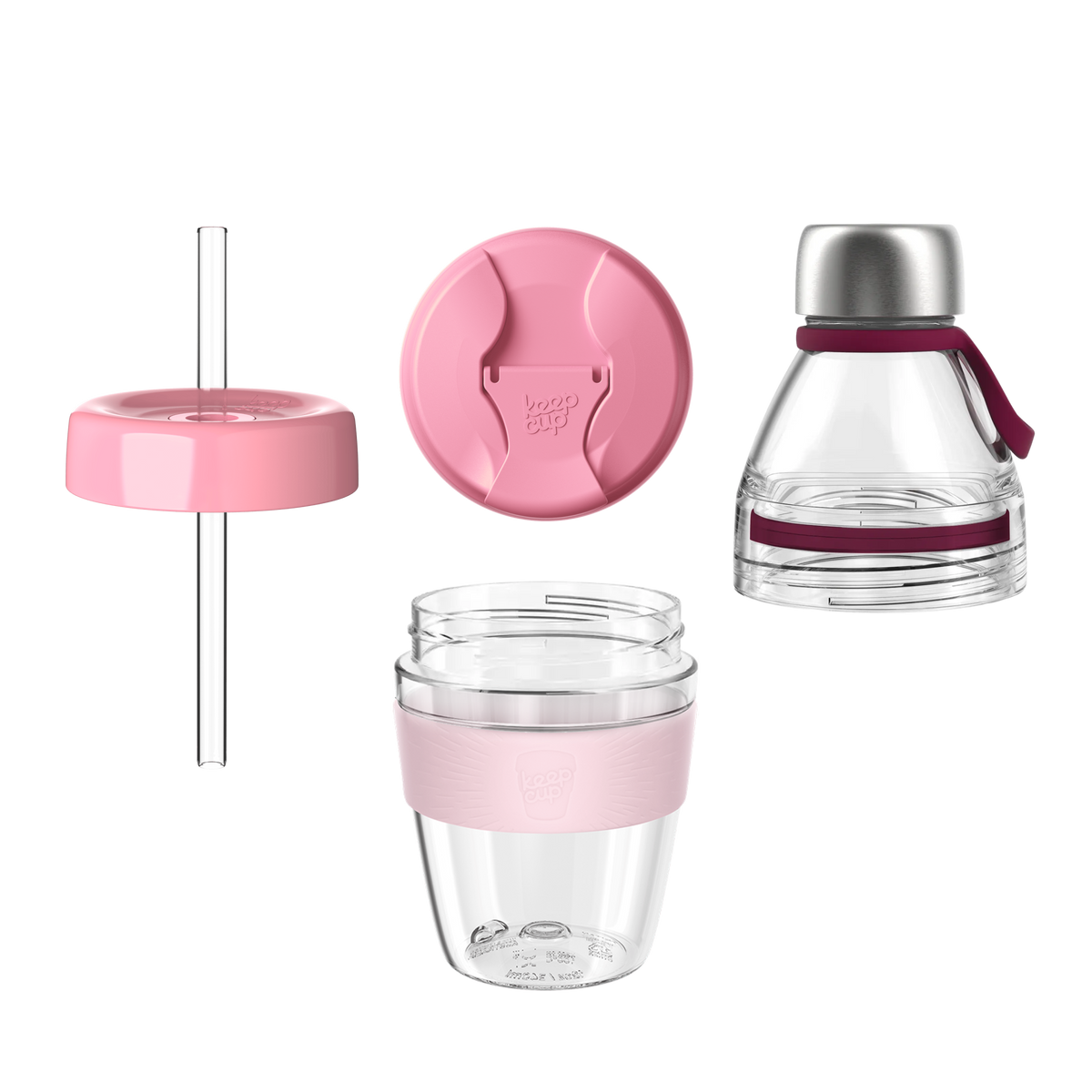
KeepCup has a dishwasher-safe travel mug or portable To-Go Tumbler for every daily on-the-go drink ritual. Find the perfect match for your drink and travel style in glass for supreme taste, plastic for those who need their reusable to be as light as possible, and high-grade electropolished steel to keep hot drinks hot and cold drinks cold. Available in barista standard 6oz, 8oz, 12oz, 16oz and 20oz sizes.
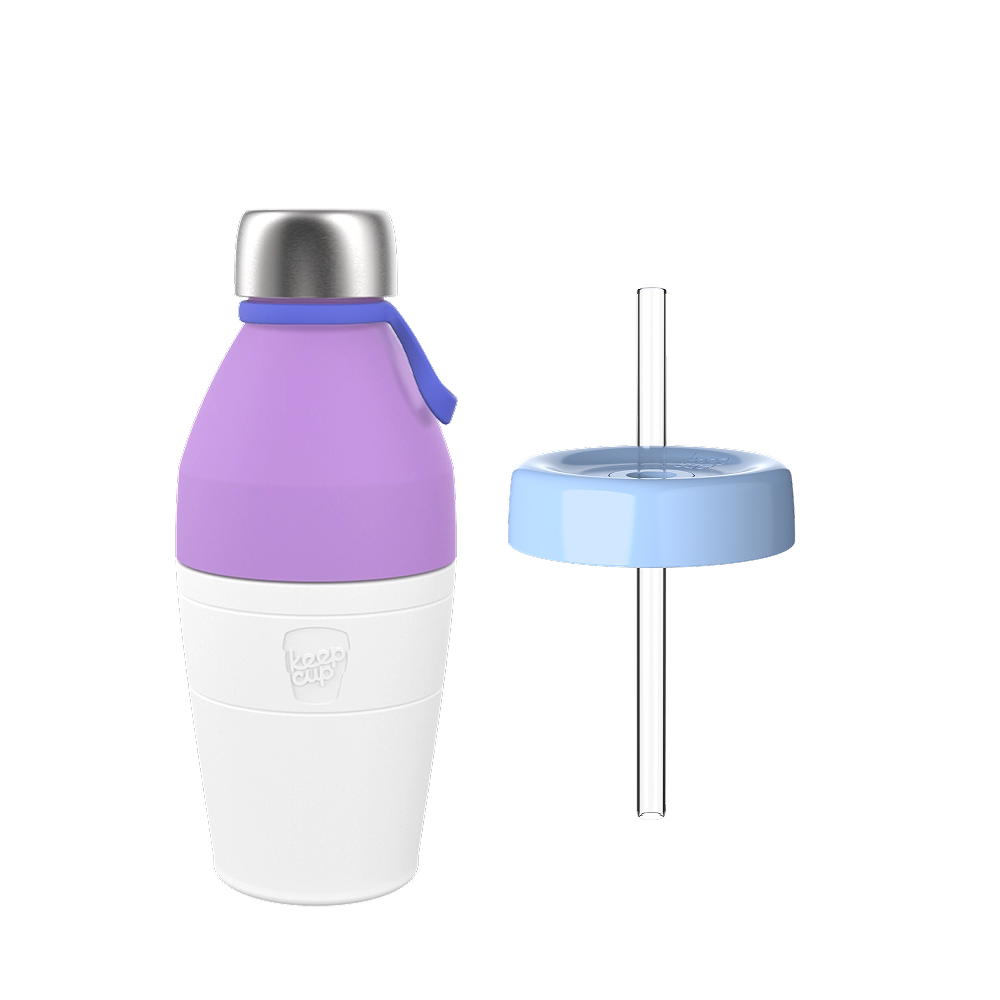
KeepCup Helix Bundle M 18oz in Orchid, showing the assembled bottle with white base, purple silicone top section, blue carry loop, and stainless steel cap alongside a separate light blue straw lid with clear reusable straw.
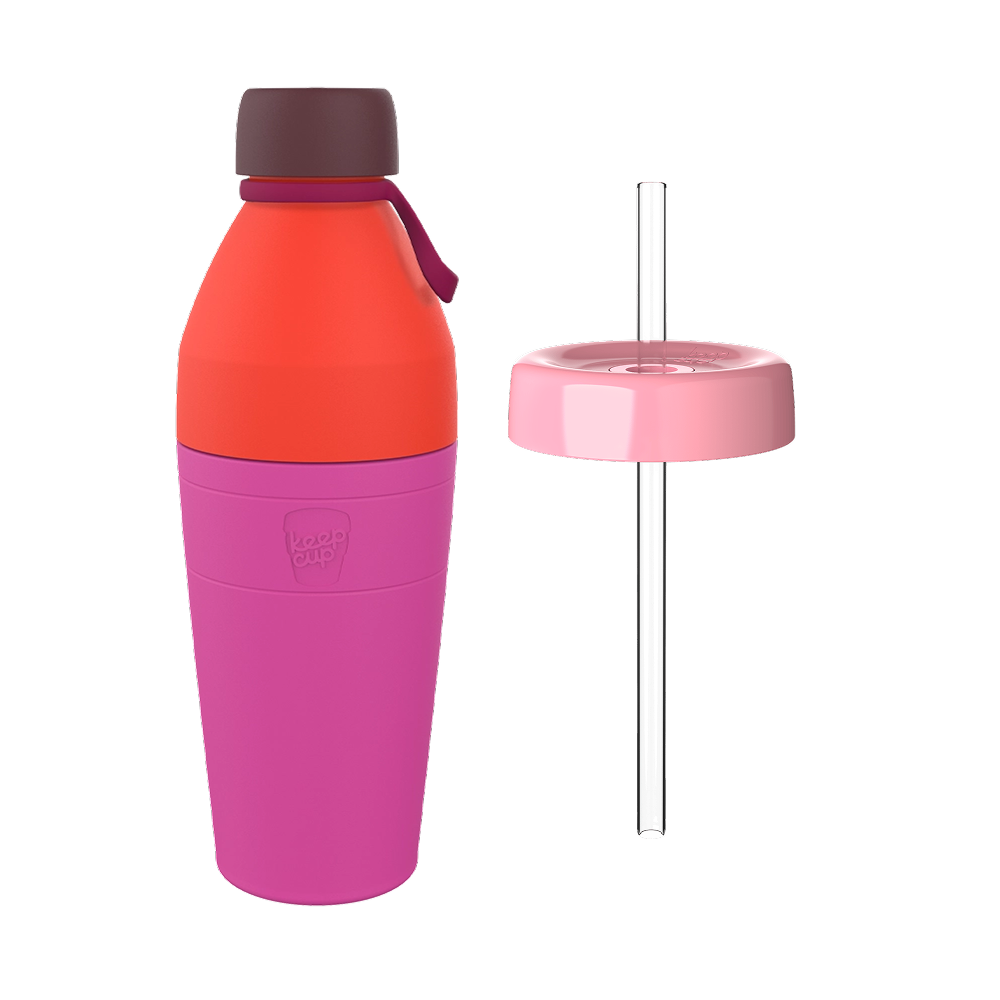
KeepCup Helix Bundle L 22oz in Fuchsia featuring a two-tone reusable bottle with coral top section, pink lower sleeve, dark burgundy cap with carry loop, shown alongside a pink straw lid with clear plastic straw.
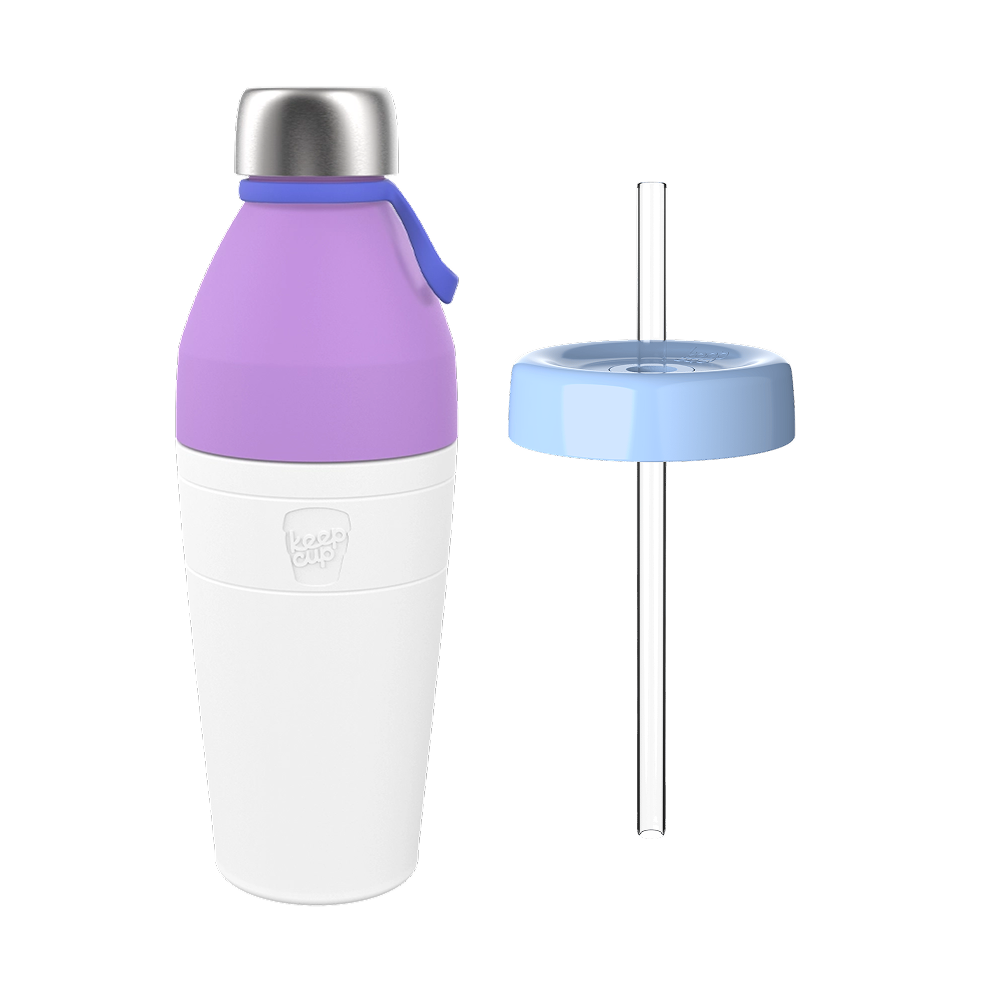
KeepCup Helix Bundle L 22oz in Orchid, shown as a product display featuring the assembled bottle with white base, lavender purple upper section, blue carrying loop, and stainless steel cap, alongside a separate light blue straw lid with clear plastic straw.
4.7
LEAKPROOF
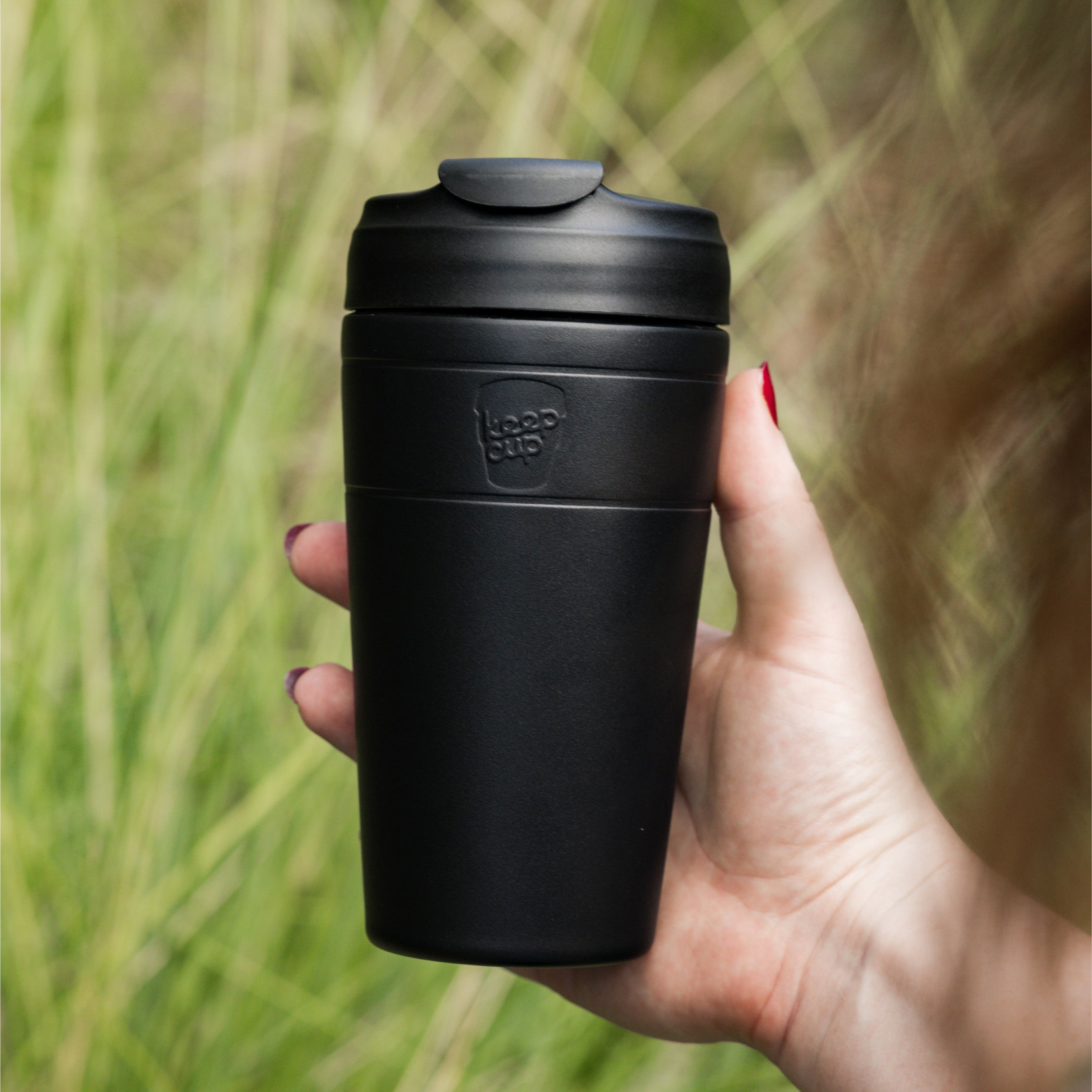
KeepCup Commuter L 16oz in Black, shown in a front-facing product shot against a neutral gray background, featuring a black insulated cup flip-top lid.
4.7
LEAKPROOF
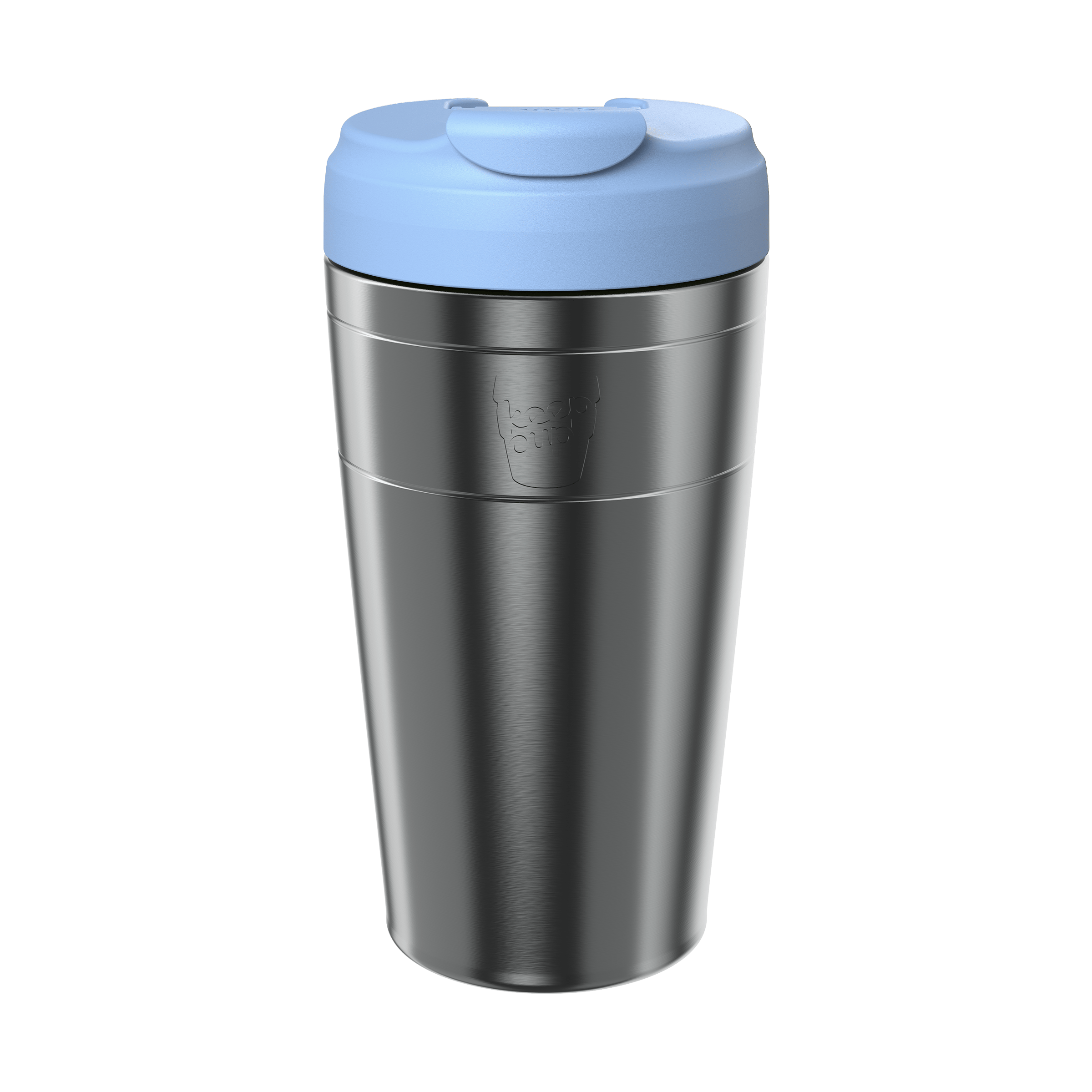
KeepCup Commuter L 16oz in Nitro Orchid, featuring a stainless steel cup with brushed gunmetal finish and orchid lid with flip-top opening, shown from a front three-quarter angle against a white background.
4.7
LEAKPROOF
KeepCup Commuter M 12oz in Nitro Orchid, featuring a stainless steel cup with an orchid lid and flip-top opening, shown from a front angle against a white background.
4.7
LEAKPROOF
Commuter - 20oz | Bone White
4.7
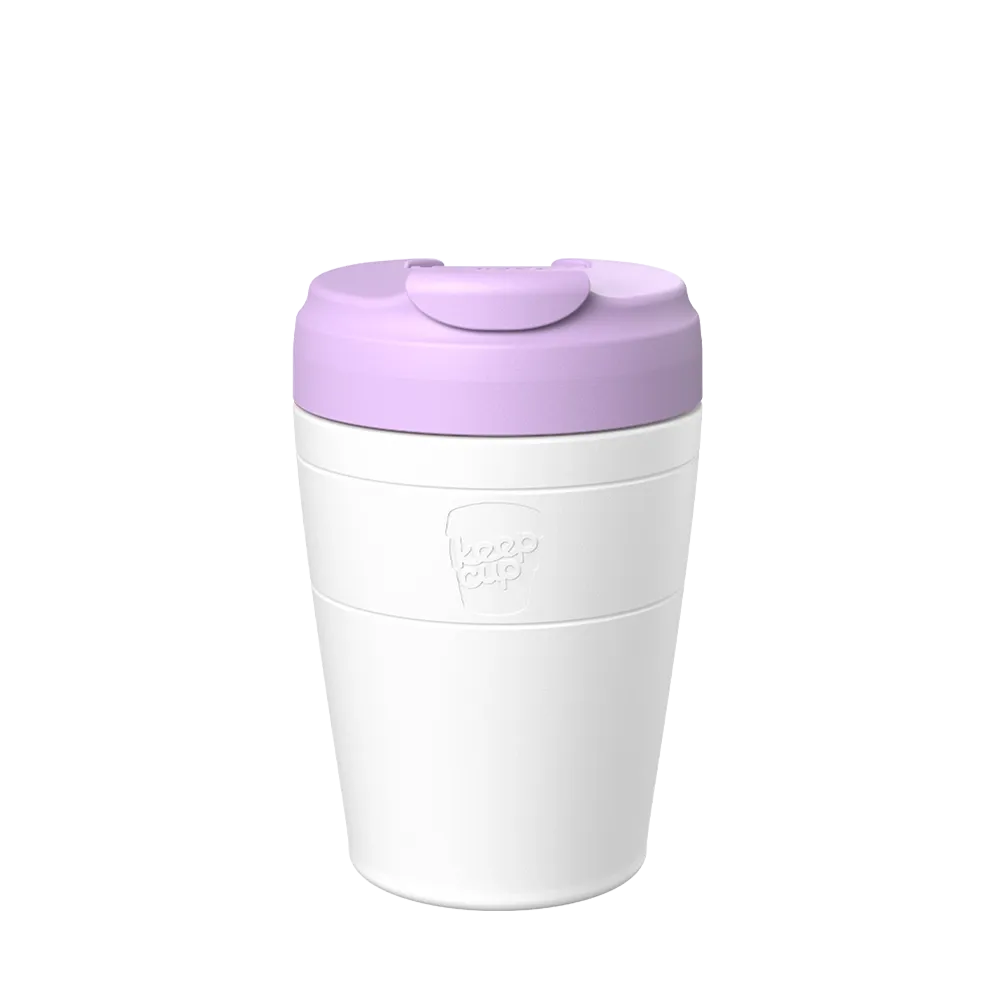
KeepCup Commuter M 12oz in Fuchsia Lilac, featuring a Fuchsia Cup wth a Wisteria lid, shown from a straight-on front view against a white background.
4.7
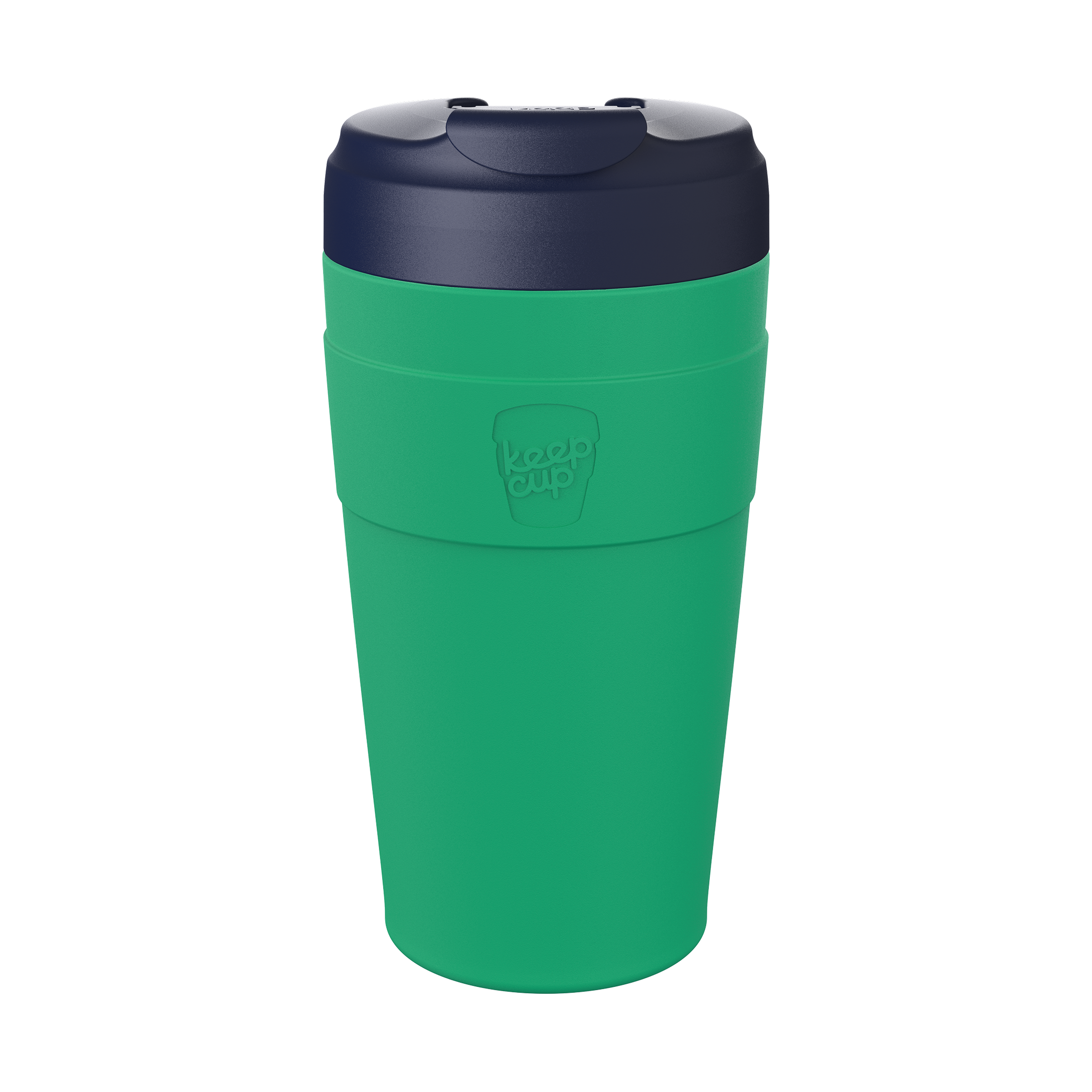
KeepCup Commuter L 16oz in Emerald Ink, featuring an emerald reusable cup and navy lid with sipper opening, shown in a straight-on product shot against a white background.
4.7
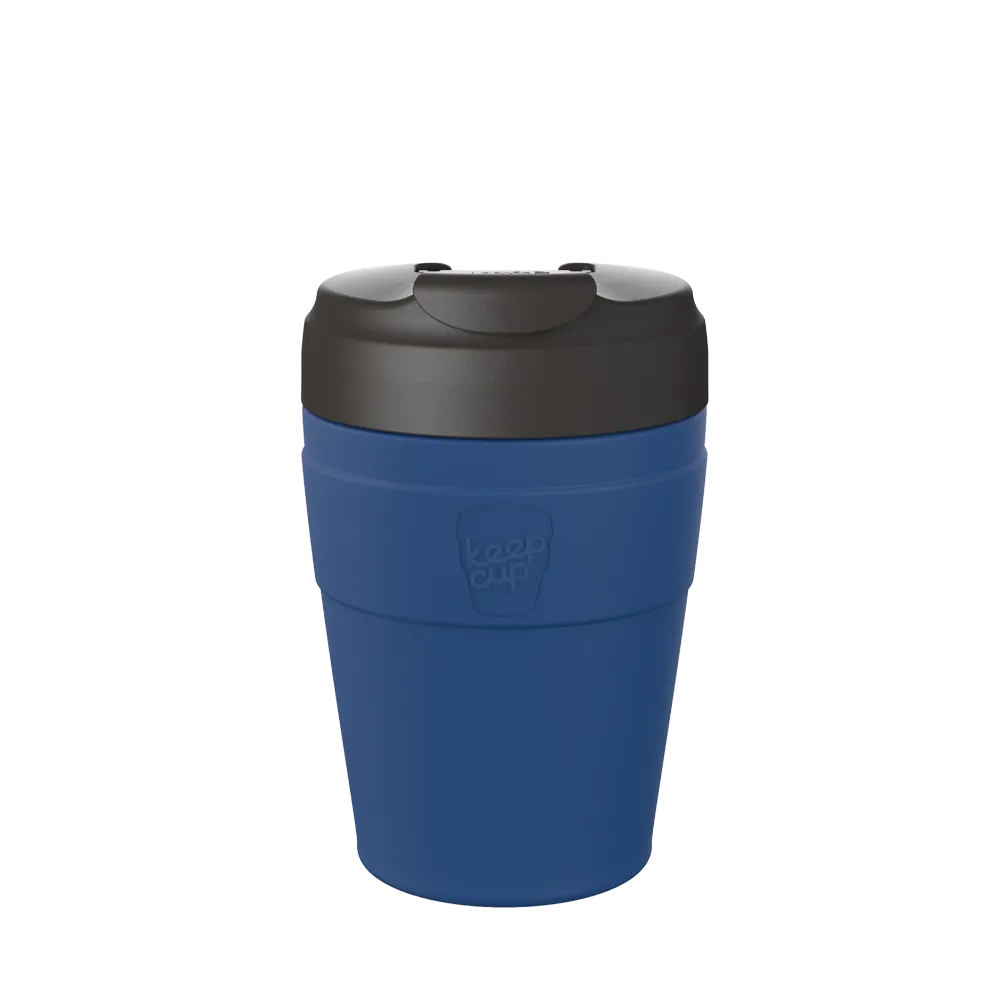
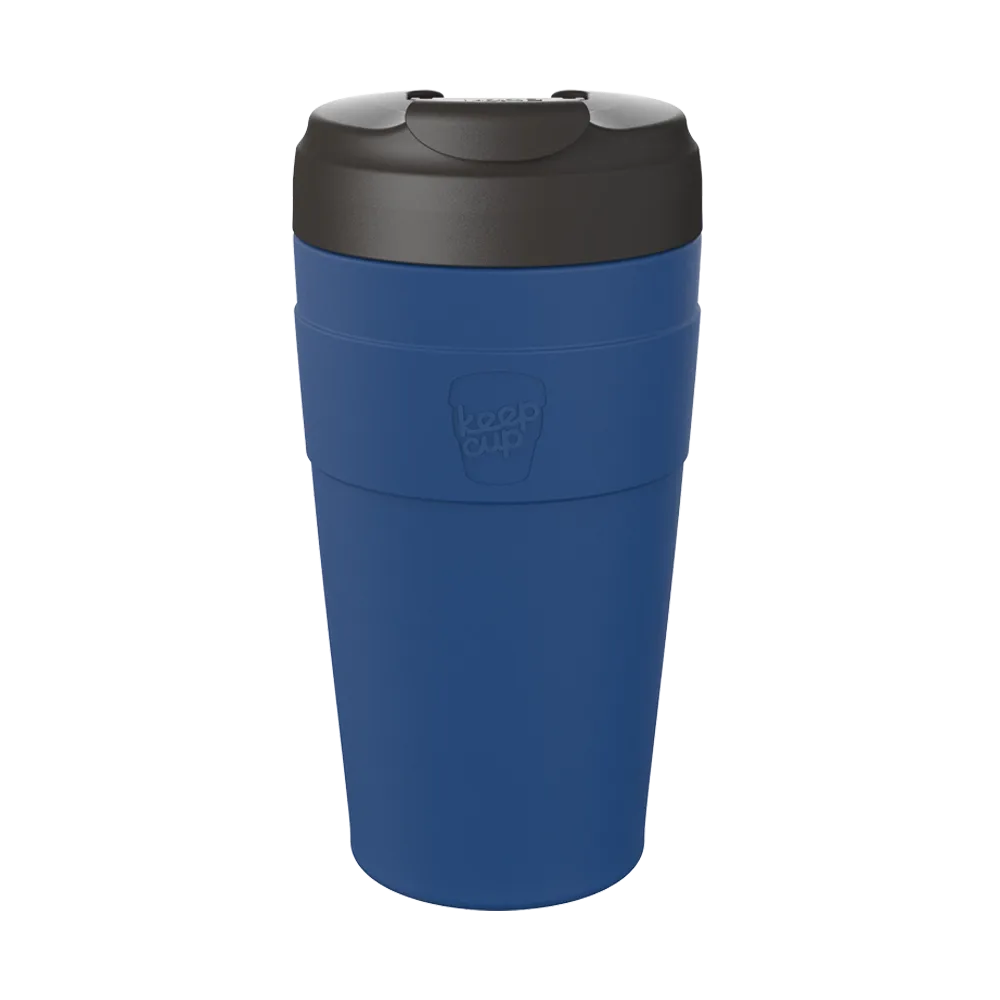
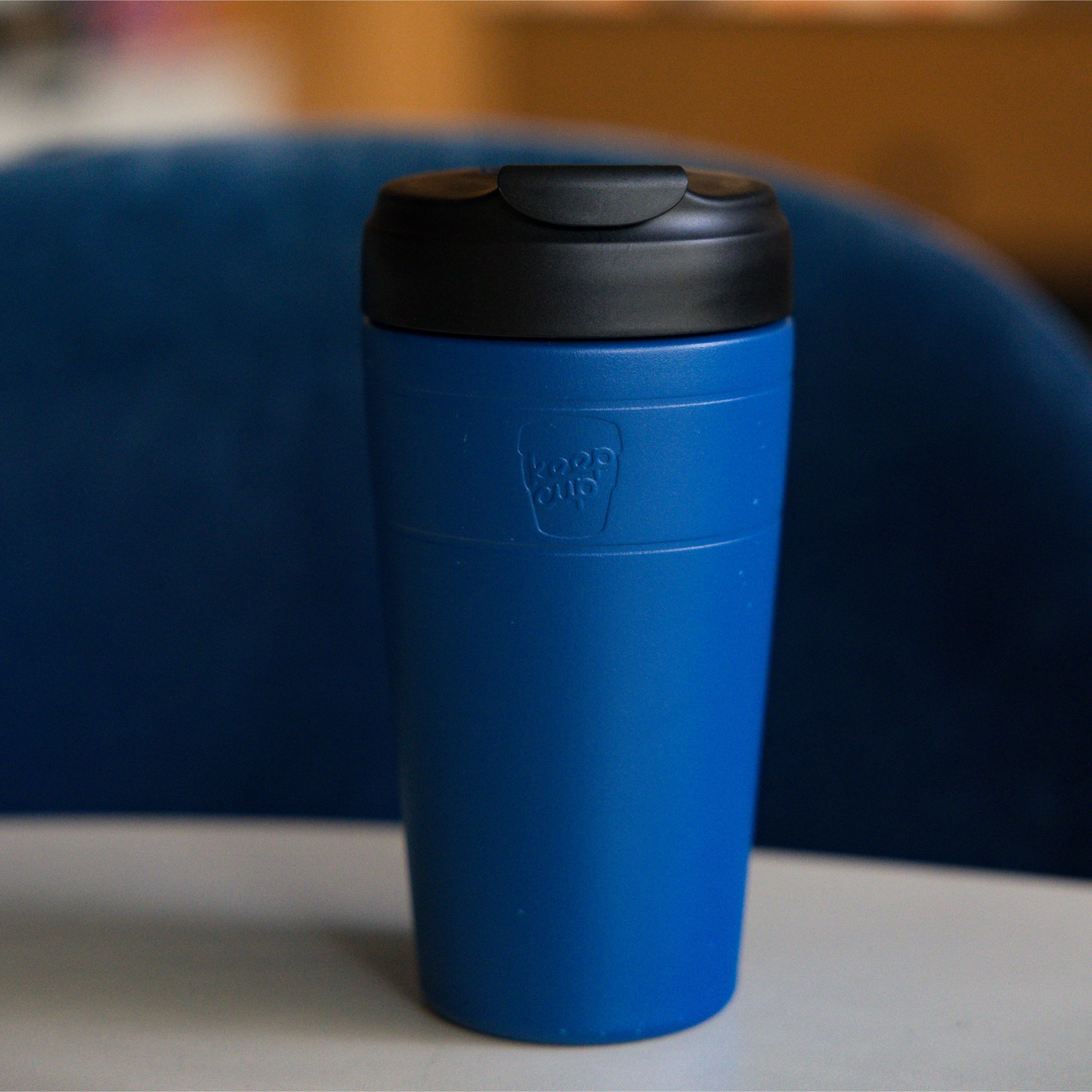
Blue reusable coffee cup with black lid and spill-proof opening, KeepCup brand logo visible on side
4.7
Blue reusable travel coffee cup with black lid and flip-top opening, KeepCup brand logo visible on side
4.7
LEAKPROOF
Commuter - 12oz | Mulberry
Do coffee shops give a discount for bringing your own cup?

Sometimes, but it’s each cafe’s call, and we’d gently argue it’s the wrong way to think about it.

A cafe still has to stock single-use cups for the customer who forgets, the tourist, the 8:15am line. That inventory doesn’t disappear because you brought a KeepCup, so the cafe hasn’t saved money, and reuse can actually slow service at peak times.

Bringing your own cup is a decision you made for you: less landfill, better coffee, a more pleasurable drink. The good deed is its own reward. The moment it needs compensating, it stops being a value and becomes a transaction, and a poor one for the cafe, discounting a customer while still carrying full inventory costs.

If a cafe runs a loyalty perk, brilliant, that’s theirs to offer. But bringing your own cup isn’t an entitlement to money off.

Why do cafes and roasters choose KeepCup?

KeepCup was designed around the way baristas make and serve coffee. The clear body keeps the pour visible, from the color and crema to the moment the drink is ready. The press-fit lid sits above the surface instead of dragging across it, helping the crema reach the customer intact.

The proportions follow real coffee orders — flat whites, lattes and americanos — rather than fast-food cup sizing. The shape supports a clean pour without drips down the side or the need to repour.

That relationship with specialty coffee goes back to the beginning, and it is why cafes like Prufrock Coffee put a considered cup in a customer’s hands rather than whatever the wholesaler sent.

The Original plastic range is made in Australia.

It is a reusable cup made for the people behind the coffee machine as much as the person carrying it.

Are disposable coffee cups actually recyclable?

Mostly, no. A to-go cup is paperboard with a plastic lining bonded to it, and that bond is the problem: two materials fused into one object that standard recycling can’t separate. Most end up in landfill.

Which is precisely what we design against. Every KeepCup is built from single-material components that separate at end of life — the band comes off the cup, the seal comes out of the lid, nothing is bonded to anything it can’t be parted from. It’s the difference between a product designed to be disposed of and one designed to be taken apart.

Some markets are now pricing the difference in. Plastic-lined cups can face both a packaging levy and a separate plastics levy: same cup, two invoices, depending where you are.

The harm was never really hidden. It was just cheaper to ignore.

Do reusable coffee cups really make a difference?

Yes, and we paid to find out rather than assuming. A reusable cup is the single highest-impact swap in most people's zero waste routine, because coffee is a daily habit. Our independent peer reviewed 2018 Life Cycle Analysis was commissioned to test the packaging industry’s claim that washing a reusable cup is worse than throwing one away. It found the opposite. Depending on material, a KeepCup beats the impact of 1,000 disposable cups in 24 to 66 uses: 24 for tempered glass, 66 for insulated steel. Our plastic range gets there faster still, because there is enough plastic in 20 disposable cups and lids to make one reusable KeepCup.

The harder question is whether any of it counts. At the 2018 climate rally our founder saw a poster reading “KeepCups won’t save the world.” Fair. And oof.

It was a warning worth hearing. The carbon footprint was coined by an advertising agency in 2004 for BP’s “Beyond Petroleum” campaign, to move responsibility for carbon pollution from oil companies onto individuals. Convenience is a strategic pillar of that industry. The irony of drinking from a reusable cup while nation states set oil refineries on fire is not lost on us.

But companies, cultures and systems are still made up of individual people. Every part of a KeepCup is replaceable so the cup stays in use for years, not seasons, because the only cup that makes a difference is the one you keep reaching for. It’s a small lever. Small levers, pulled by enough people, are how a 400-year-old tree gets to stay standing.

What's wrong with disposable coffee cups?

A disposable cup looks like nothing. Paperboard, a plastic lining, gone in twenty minutes. Trace it back far enough and it starts somewhere much bigger than a trash can: a forest that took decades or centuries to grow, cut down to make something that lasted the length of a coffee.

Virgin wood fibre is what makes a to-go cup work. Food-contact paperboard needs long, strong fibres, which is why disposable cups lean on freshly logged trees rather than recycled stock. That demand lands on forests — and a logged natural forest is rarely replaced by another natural forest. It becomes a single-species plantation. A plantation can grow timber. It cannot grow the layered, thousand-species complexity of what it replaced.

“Renewable” is doing a lot of quiet work here. A tree can be replanted, but a 400-year-old tree is not a renewable resource in any meaningful sense. Replacing it means waiting 400 years, and a changing climate means that clock may never restart the same way twice. It is closer to demolishing a cathedral to build a shed.

Biodiversity is the part that does not come back. Ancient woodland covers only a small fraction of the UK, and once it is gone the soil, fungal networks and species that depended on it go with it. Intact forest is also a carbon bank: degrade it and you release what it was holding, which makes the next season worse.

This is why KeepCup exists. The maths on disposables never worked — not economically, not environmentally, and not when you follow the supply chain back to where the fibre came from. Our independent peer reviewed 2018 Life Cycle Analysis put numbers to it. Every reusable cup in circulation is one less disposable cup demanding fibre from somewhere.

What makes KeepCup reusable coffee cups different from other brands?

Barista-standard sizing, a press-on splashproof lid you can drink with on or off, and a modular build designed in Australia. That combination is what makes a KeepCup different from a generic reusable cup.

  • Sizes that match cafe pours: 6oz, 8oz, 12oz and 16oz map to what a barista actually makes, so there is no guesswork and no waste.
  • Press-on splashproof lid: Drink with the lid on or off. Simple to use, simple to clean.
  • Three materials, one design language: Lightweight colored plastic, the iconic Brew Cork tempered glass, and double-walled insulated steel.
  • Modular: Bands, lids, plugs and seals are replaceable, so a worn part does not cost you a cup.
  • Designed in Australia: With the original patents on the barista-standard cup we created in 2009.
What makes KeepCup different on sustainability?

KeepCup designs products to stay in use. Not to be bought, admired and replaced, but to be washed, carried and reached for again tomorrow. That is what zero waste looks like in practice: not a perfect product, but one you keep using.

We commissioned an independent peer reviewed Life Cycle Analysis in 2018 to debunk the packaging industry’s claim that washing a reusable cup has a greater environmental impact than single use. It was the first study of its kind, and it found the opposite. Depending on material, a KeepCup beats 1,000 disposable cups in 24 to 66 uses.

  • We started the category, not the trend: KeepCup created the barista-standard reusable cup in 2009 and holds the original patents. Sizes match cafe pour volumes, so a barista can fill without guesswork or waste.
  • We design for reuse, not for replacement: Every part can be bought individually. A worn seal shouldn’t cost you a cup.
  • We think the washing is the point: Loan schemes, return logistics and tracking systems exist to engineer away one small act — rinsing your own cup. Owning something and caring for it is not an inconvenience to be solved.
  • We don’t think reuse needs a reward: Bringing your own cup is a decision you made for you. The good deed is its own reward.

Made by a certified B Corp that gives 1% of global revenue to environmental causes. A reusable cup only makes a difference when it becomes part of everyday life — and that is the whole design brief.

What's the right cafe etiquette when using a reusable cup?

Hand over a clean cup. Hang onto the lid.

Grab your beverage. Secure the lid and go enjoy your day.

That’s the whole ritual. A clean, empty cup handed over at the till is the fastest way to keep the line moving, and the lid staying in your hand is what makes it fast.

KeepCup was born in a cafe in 2009 and baristas have shaped the design ever since. The sizes are built to cafe pour volumes, not to look good on a shelf: 8oz for a flat white or short latte, 12oz for the cafe standard, 16oz when there’s more milk or ice in play. Hand over a 12oz and your barista knows exactly what fits. No guesswork, no waste, no repouring.

Reuse can slow a busy counter down. Doing it properly is how you make sure it doesn’t.

Why aren't KeepCup insulated Travel Mugs ceramic lined?

This is a quality issue. When the steel content is high enough, Stainless Steel is a food-safe material that can be used without a lining. We use BPA and BPS free 18/8 90% recycled stainless steel. It has no aftertaste, and therefore no ceramic lining is needed in our travel mugs.

What are the key Features of KeepCup Travel Mugs?

Insulated steel, a leakproof lid, and parts you can replace. Those are the three that matter.

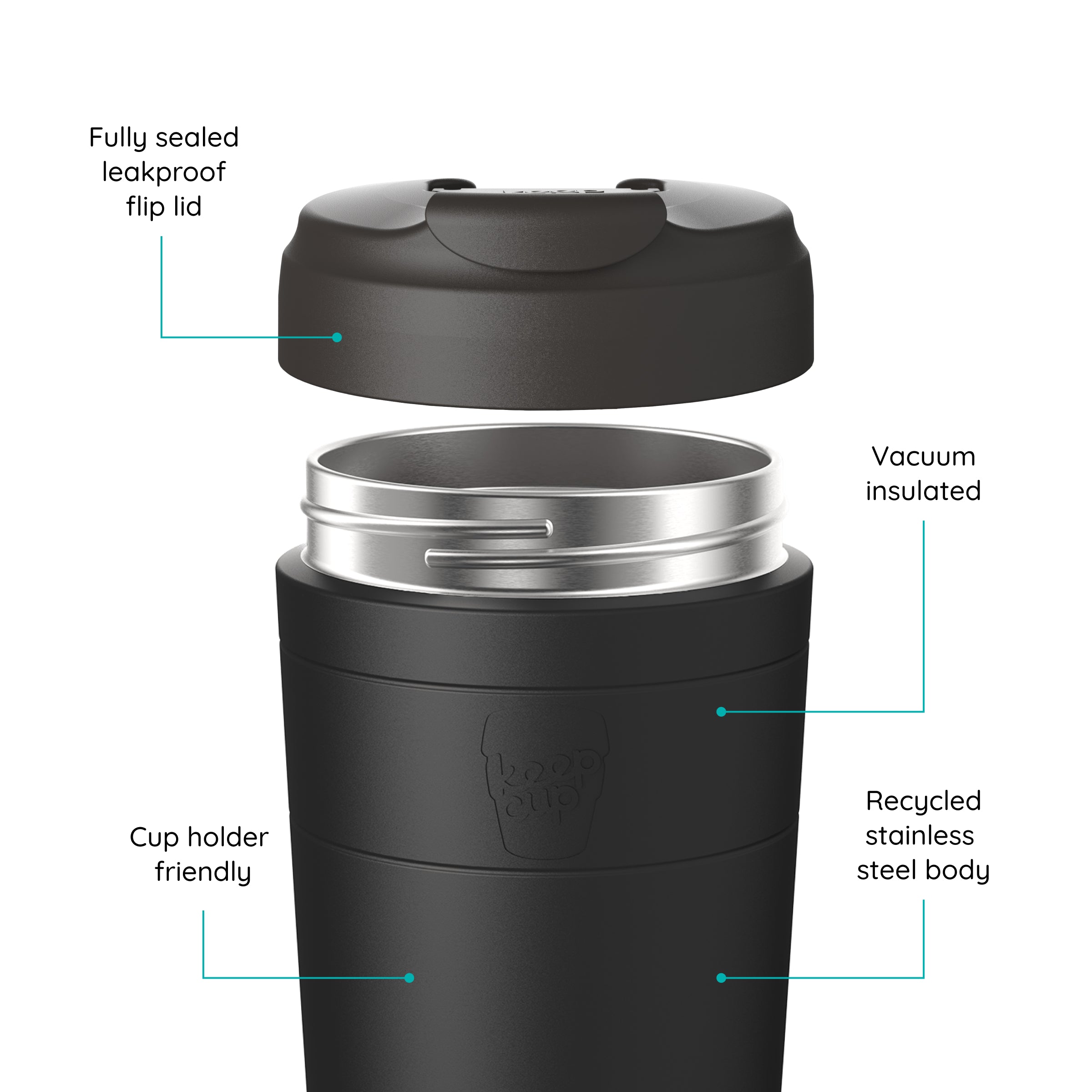
  • 18/8 stainless steel, 90% recycled: Durable, corrosion and stain resistant, and electropolished rather than ceramic-coated so there is no flavor taint.
  • Leakproof screw-on lid: A tight seal for the bag, with easy sipping when you want it. Store it in your bag with confidence.
  • Double-wall vacuum insulation: Keeps hot drinks hot and cold drinks cold for hours, with no condensation on the outside.
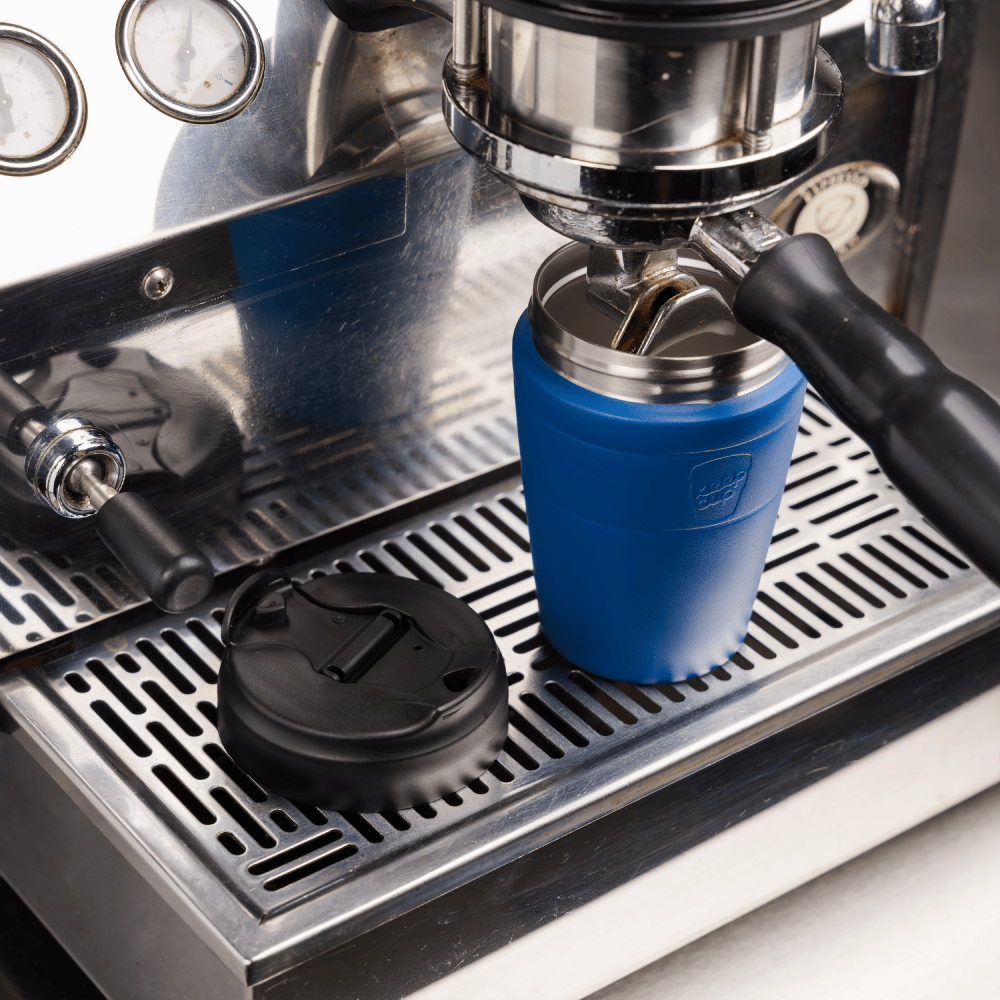
  • Tapered, cup-holder friendly: Fits car cup holders and most cafe machines.
  • Modular and repairable: Lids, seals, bands and plugs can all be replaced individually. 50% recycled BPA-free plastic in cups and lids.

The base is also compatible with the Cold Cup lid and Bottle lid, so one base covers hot, cold and hydration.